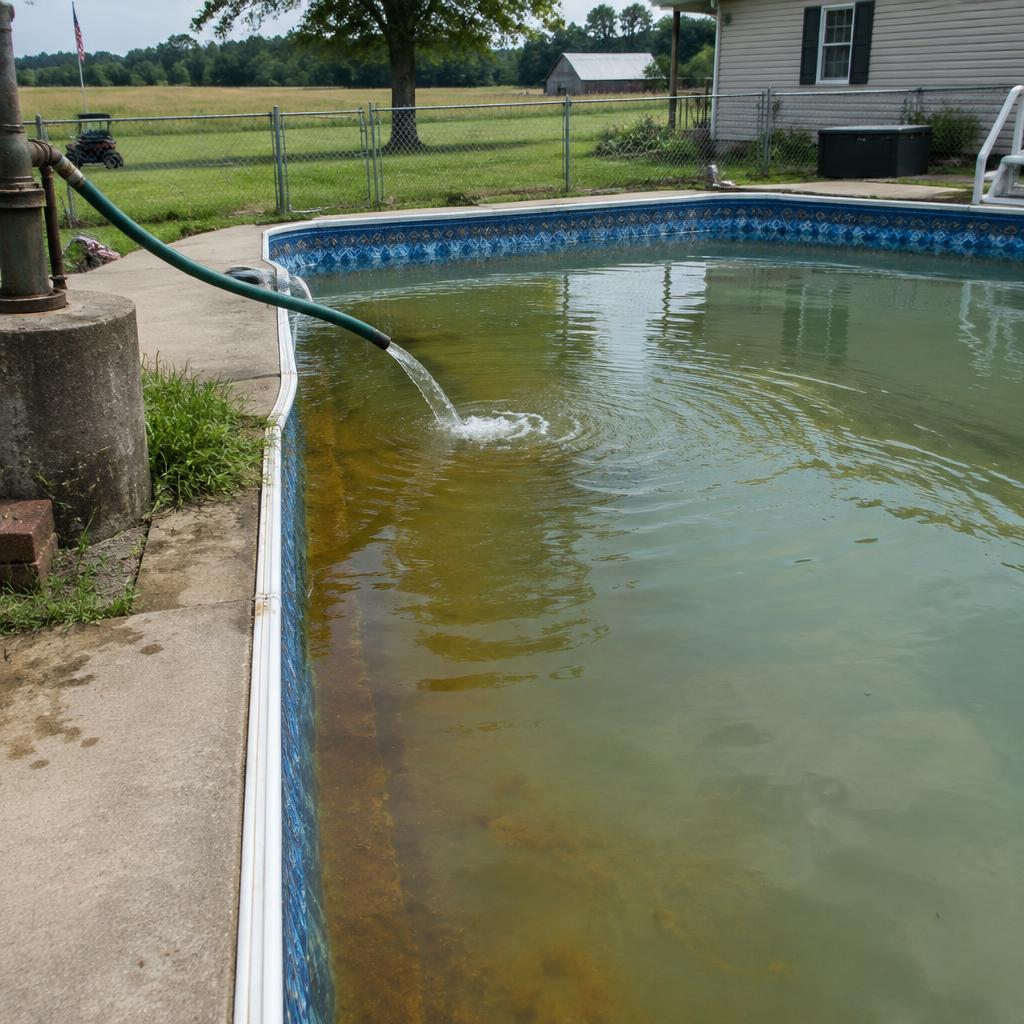
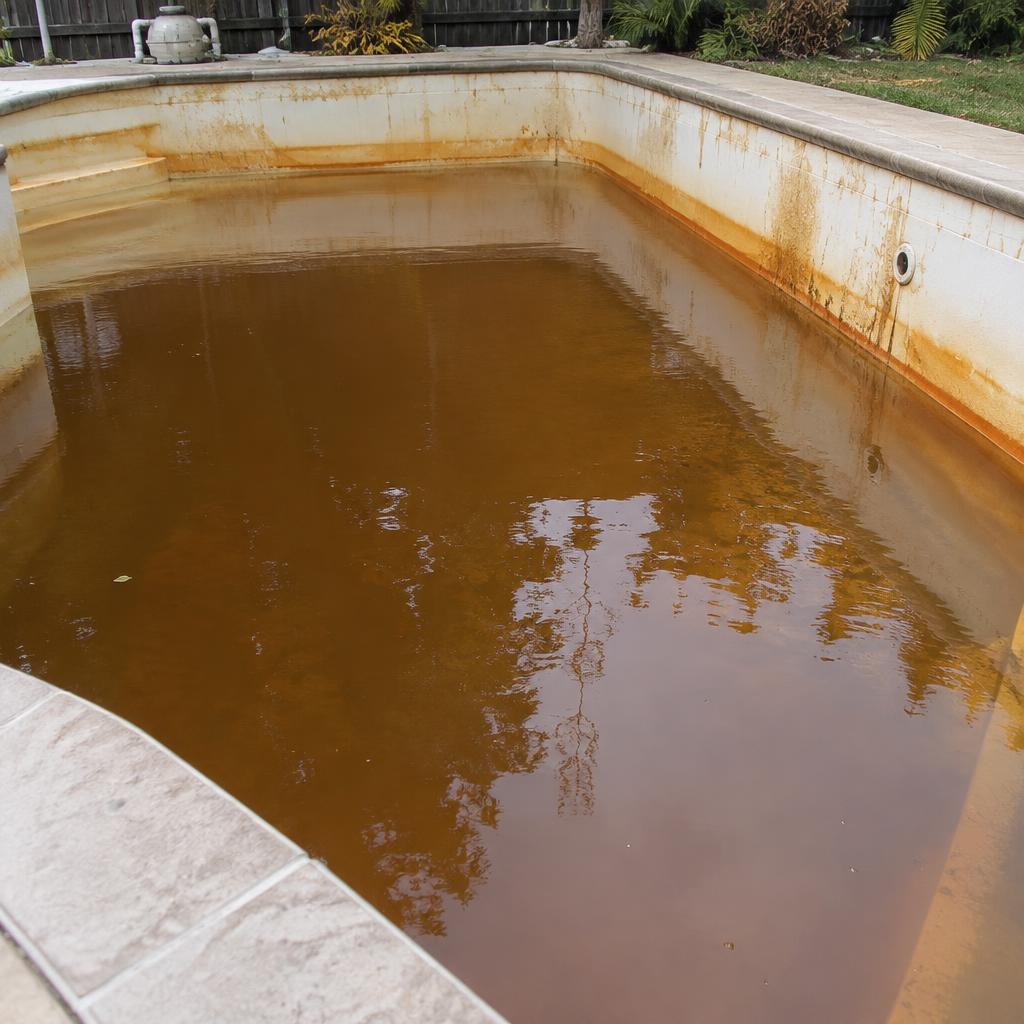
Iron usually turns water green-tinted clear, tea-colored, or brown, and leaves orange-brown stains.
Manganese often shows as pink, purple, or black-brown tints and stains.
Copper (also from corroded heaters or some algaecides) can cause blue-green water and blue-green or dark stains, and can tint light hair green.
Color often appears or gets darker right after you add chlorine — chlorine makes dissolved metals visible.
Metals or algae? Quick comparison
Feel of walls
Algae: slimy. Metals: smooth.
Run a hand on the wall below the waterline.
Water look
Algae: cloudy green. Metals: often clear but tinted.
Metal-tinted water may still let you see the floor.
After chlorine
Algae: fades to gray/cloudy. Metals: color can appear or deepen.
Brushing
Algae: lifts into water. Metal stains: stay put.
What to do
1Before adding chlorine to fresh well water, have the fill water (or pool) tested for iron, copper, and manganese — most pool stores offer this.
2If metals are present, follow the professional's recommendation. Treatment usually involves a metal sequestrant or a metal removal product chosen for the metal and level detected.
3Many owners use a pre-filter on the hose when filling with well water. Follow the filter maker's flow rate.
4Balance pH before heavy chlorination. Keep using the product per label and retest metals as recommended.
5Stains on surfaces need a stain treatment chosen for the stain type and your surface — test a small area first.
Brown tint and orange stains suggest iron. Testing confirms. Demonstration image.
Products for metals depend on the water analysis. Don't add sequestrants or stain removers 'just in case' — and never combine them with other chemicals in the same container.