STEP 2/7
0%
Step 2
Test Your Pool Water
Testing tells you exactly what's wrong. A drop-based (DPD/FAS-DPD) kit is more accurate than strips, especially at high chlorine levels. Write every result down.
What You'll Need
- Pool test kit (drop kit recommended) or quality test strips
- Clean sample cup
- Notebook or phone notes
- Pool store water test (optional, useful for metals)
What To Do
- 1Take the sample from elbow-deep water, away from return jets and skimmers. Turn the cup upside down, push it down, then flip it to fill.
- 2Test FREE CHLORINE first, following your kit's instructions exactly (drop counts, waiting time, color match).
- 3Test pH. Read it in good daylight against the comparator.
- 4Test TOTAL ALKALINITY.
- 5Test CYANURIC ACID (stabilizer) if you use chlorine tablets/stabilized chlorine or your pool is outdoors in the sun.
- 6If you fill from a well, see brown/orange tints, or chlorine turns the water a new color, have METALS (iron, copper, manganese) tested — most pool stores do this.
- 7Write down each number with today's date and time.
Reference ranges are general guidance from the CDC and common industry practice. Your sanitizer type, stabilizer level, and equipment manufacturer's instructions always take priority.
Photo Guide
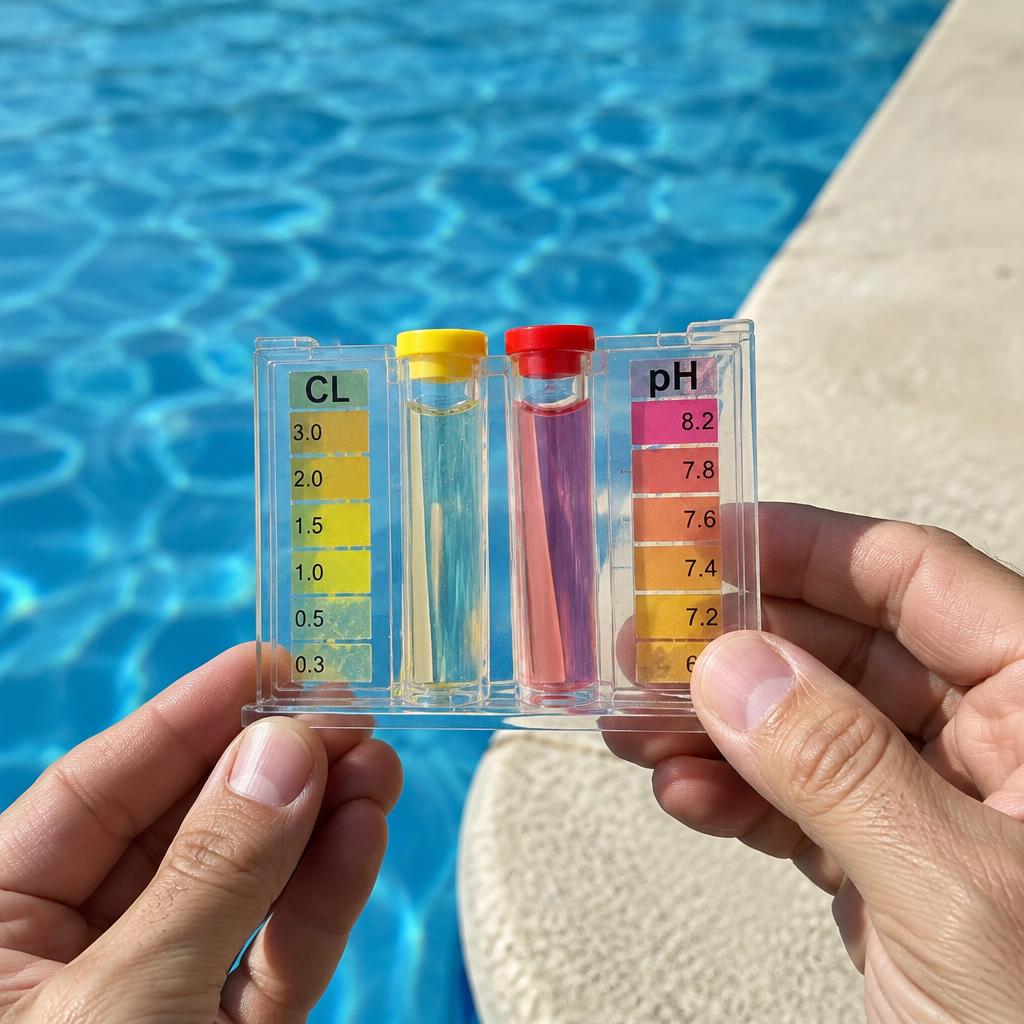
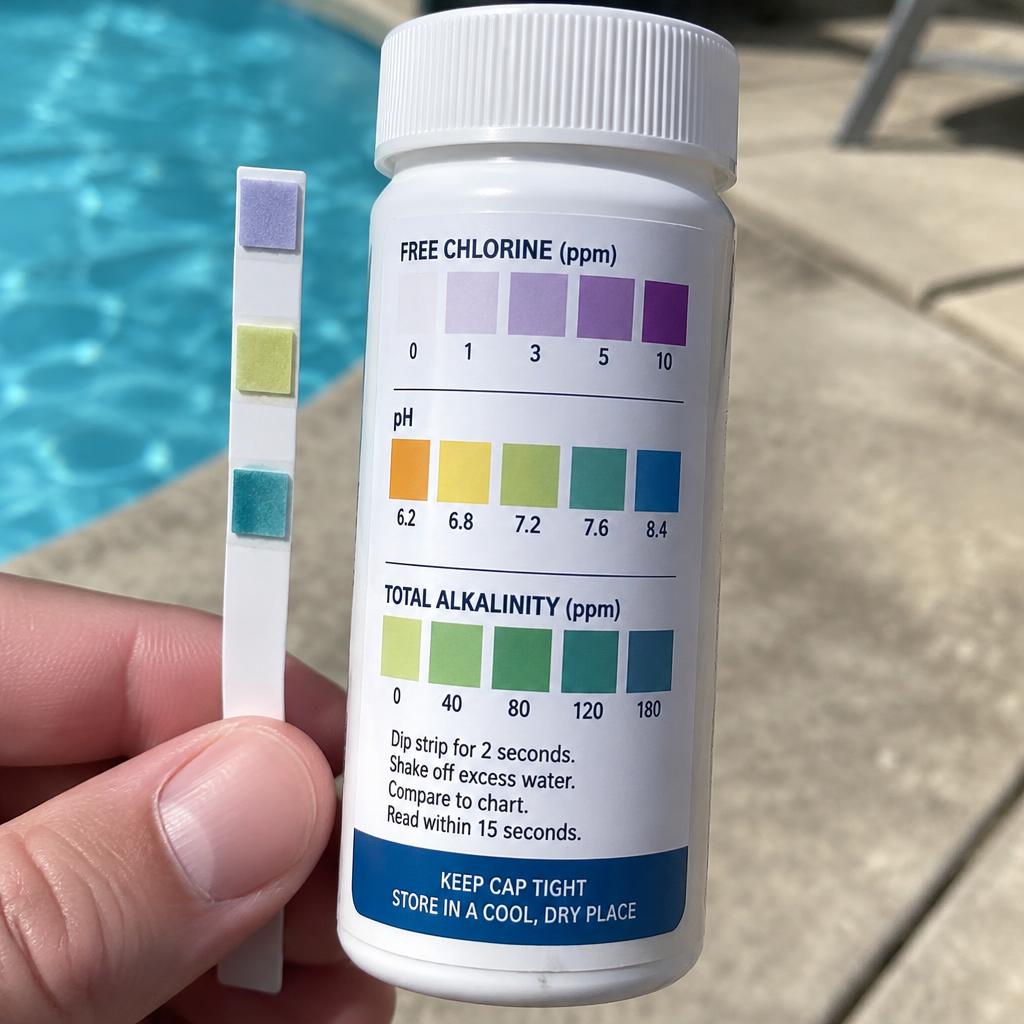
What your numbers mean (residential chlorine pools)
- Free chlorine
- 1–3 ppm typical
- pH
- 7.2–7.8
- Total alkalinity
- 60–120 ppm common
- Cyanuric acid
- 30–50 ppm common
- Bromine (if used)
- 3–8 ppm
- Salt (salt pools)
- Per your generator manual
CDC: at least 1 ppm in pools. Higher targets apply when using stabilizer — check your product's label.
CDC range. Below 7.2 is corrosive/irritating; above 7.8 makes chlorine much weaker.
Buffers pH. Follow the target on your test kit or surface manufacturer.
Protects chlorine from sunlight. Too high (often 90+ ppm) makes chlorine less effective.
CDC guidance for pools using bromine.
Commonly around 2,700–3,400 ppm, but your model's range wins.