STEP 5/7
0%
Step 5
Apply the Appropriate Sanitizer Treatment
Sanitizer kills algae and germs. A green or neglected pool usually needs a heavier, label-directed treatment (often called 'shocking'). The right amount depends on your product, its strength, your volume, and your stabilizer level.
What You'll Need
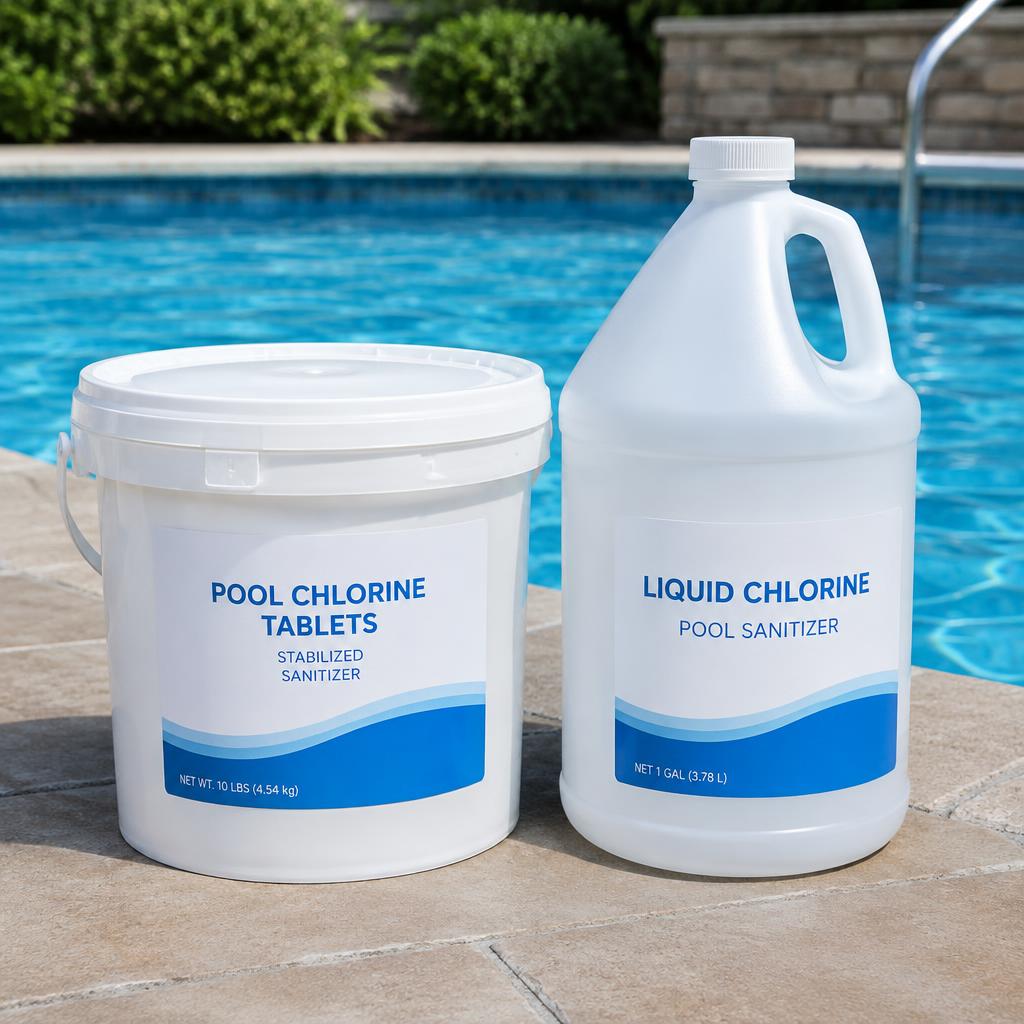
- A sanitizer compatible with your system (chlorine, bromine, or the treatment your salt system manufacturer recommends)
- Pool volume
- Product label
- Gloves and goggles
- Pump running
What To Do
- 1Confirm pH is in range first (Step 3). Chlorine works poorly at high pH.
- 2Check compatibility: read the label for your sanitizer type, your surface (some products warn about vinyl), and your system (biguanide pools must NOT use chlorine).
- 3Find the label's dose for your situation (e.g. 'to shock' or 'for algae') and scale it with the Pool Calculator.
- 4Add it exactly as the label directs — usually in the evening, so sunlight doesn't burn it off, with the pump running.
- 5Keep the pump running continuously while treating so the product mixes and the filter catches dead algae.
- 6Retest free chlorine at the time the label suggests — typically the next morning. If chlorine dropped to near zero overnight, algae is still consuming it and another label-directed dose is usually needed.
Never pre-dissolve or premix sanitizer unless the label specifically tells you to. Never mix different chlorine types together or with acid. Keep swimmers out until free chlorine and pH test within your label's swim-safe range.
Photo Guide
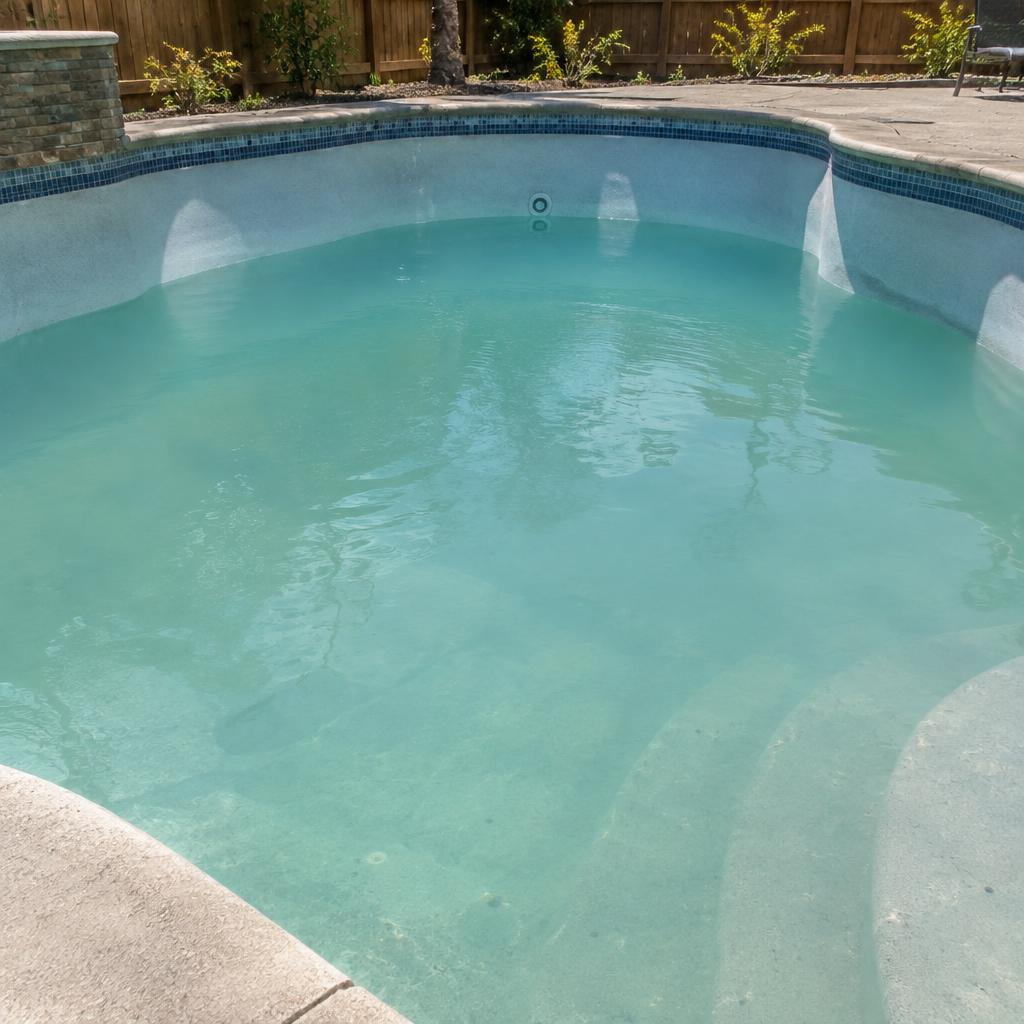
When intensive treatment is usually indicated
- Visible green water or algae on surfaces.
- Free chlorine near zero with cloudy water.
- After heavy rain, a party, or a long period without care.
- Your test shows high combined chlorine (total minus free) — follow your kit's guidance.
- Metals suspected? Get them tested first — heavy chlorine can stain surfaces when metals are present.