Special Guide 4
Different Pool Surfaces
Fiberglass, vinyl, and plaster each need the right brush, cleaners, and chemical handling.
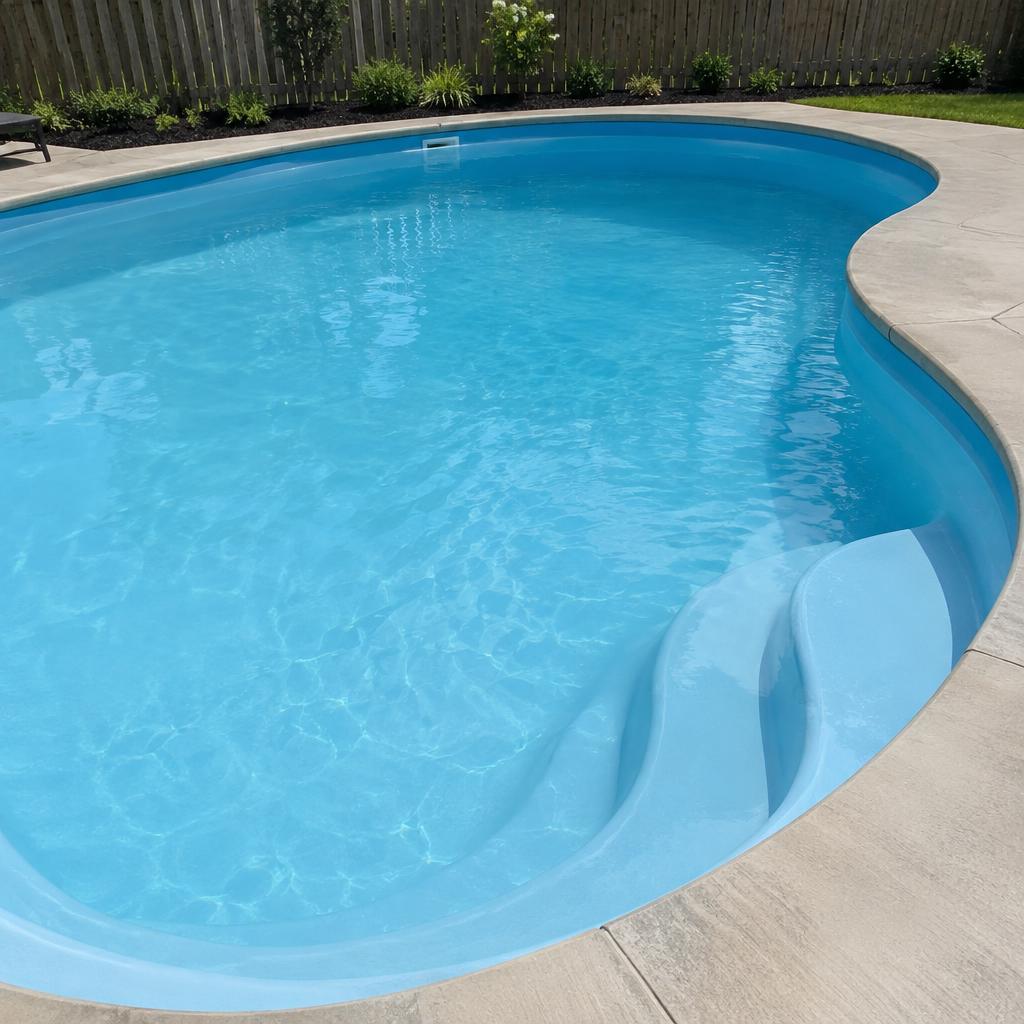
← All special guidesFiberglass: smooth gel-coat shell. Demonstration image. 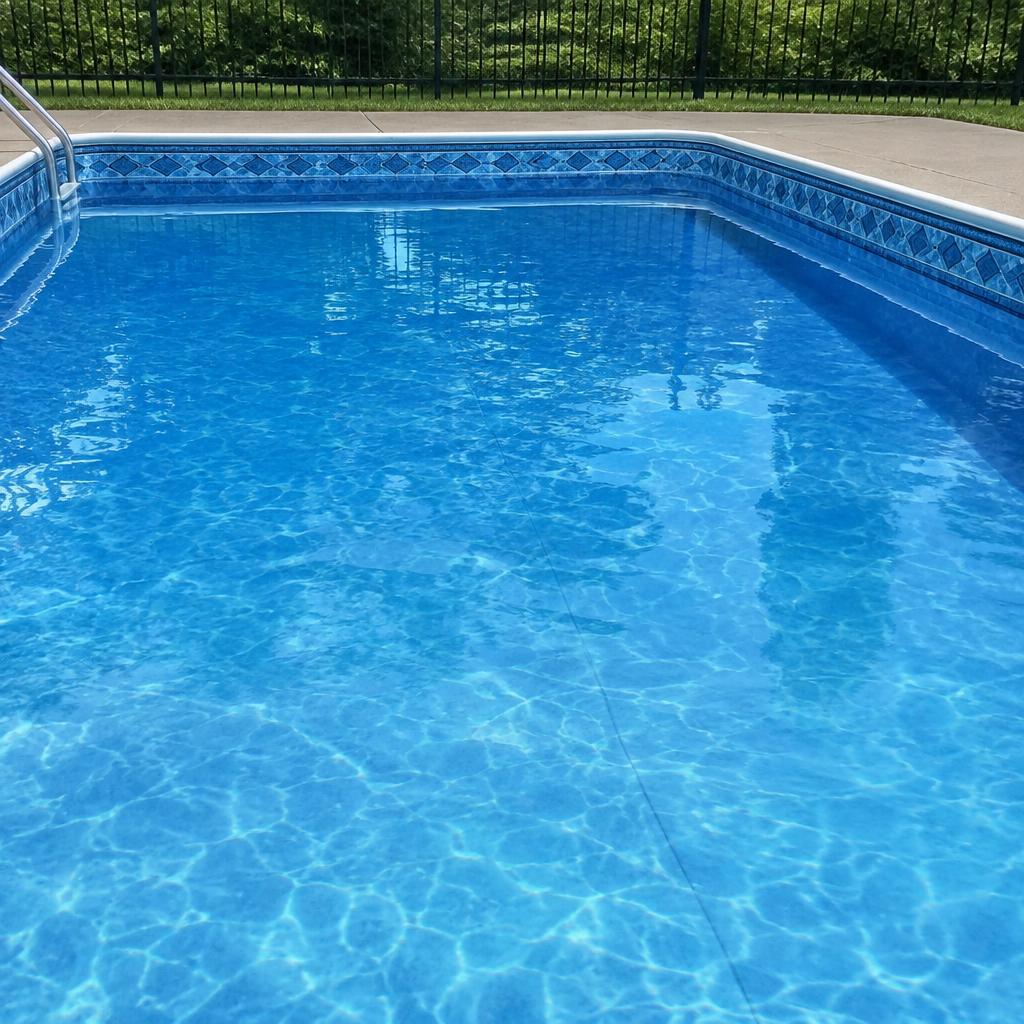
Vinyl: printed liner with a visible border pattern. Demonstration image. 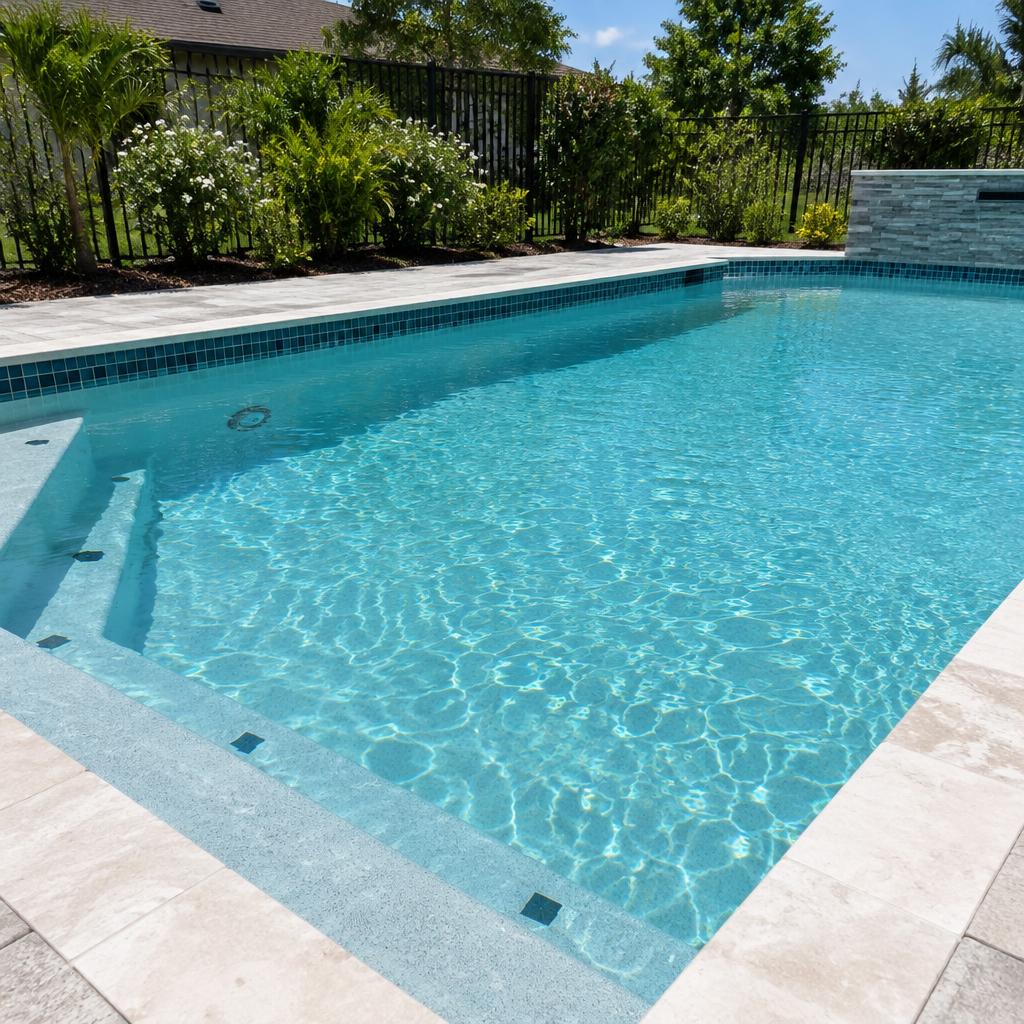
Plaster: textured finish with a tile line. Demonstration image.
Fiberglass pools
- Nylon brushes only — steel scratches the gel coat.
- Use non-abrasive cleaners labeled safe for fiberglass.
- Keep pH and alkalinity in the range the manufacturer specifies; high calcium and metals can stain gel coat.
- Don't let undissolved granular product sit on the floor — brush it so it disperses (only as the label allows).
Vinyl liner pools
- Nylon brushes only. Use a vacuum head with wheels or brushes made for vinyl.
- Never let tablets or granular chlorine rest on the liner — they can bleach and weaken it. Use a floater or feeder if the label allows.
- Keep water level up; low water can let the liner shift or pull out of its track.
- Watch for wrinkles, bleaching, or tears. Draining a vinyl pool can damage the liner — talk to a pro first.
Concrete / plaster pools
- Nylon brush routinely; a stainless steel brush can help with stubborn algae on plaster (not on painted or pebble finishes unless approved).
- Low pH etches plaster; high pH and calcium cause scale. Keep pH 7.2–7.8.
- New plaster has special startup rules — follow your installer.
- Don't drain a concrete pool without professional advice — groundwater can lift the shell.
Before using any cleaner, stain remover, or chemical, check that the label lists your surface as compatible.